Wednesday, January 27, 2010

An Ode to Craigslist


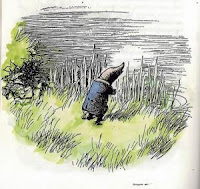
We others, who have long lost the more subtle of the physical senses, have not even proper terms to express an animal's inter-communications with his surroundings, living or otherwise, and have only the word "smell," for instance, to include the whole range of delicate thrills which murmur in the nose of the animal night and day, summoning, warning, inciting, repelling. It was one of these mysterious fairy calls from out the void that suddenly reached Mole in the darkness, making him tingle through and through with its very familiar appeal, even while yet he could not clearly remember what it was. He stopped dead in his tracks, his nose searching hither and thither in its efforts to recapture the fine filament, the telegraphic current, that had so strongly moved him. A moment, and he had caught it again; and with it this time came recollection in fullest flood.

Home! That was what they meant, those caressing appeals, those soft touches wafted through the air, those invisible little hands pulling and tugging, all one way! Why, it must be quite close by him at that moment, his old home that he had hurriedly forsaken and never sought again, that day when he first found the River! And now it was sending out its scouts and its messengers to capture him and bring him in. Since his escape on that bright morning he had hardly given it a thought, so absorbed had he been in his new life, in all its pleasures, its surprises, its fresh and captivating experiences. Now, with a rush of old memories, how clearly it stood up before him, in the darkness! Shabby indeed, and small and poorly furnished, and yet his, the home he had made for himself, the home he had been so happy to get back to after his day's work. And the home had been happy with him, too, evidently, and was missing him, and wanted him back, and was telling him so, through his nose, sorrowfully, reproachfully, but with no bitterness or anger; only with plaintive reminder that it was there, and wanted him. 


The Wind in the Willows, Kenneth Grahame


*   *   *


I had a dream in the last few minutes before waking up this early morning.

It was dark and I was waking up in our Menlo Park apartment, and Stephen was out of town (Stephen is actually, in waking life, out of town). 

I got up and walked into the dining room. I reached for the blinds to try and peer out. Apparently, in my dreams, I also morosely wish I could go jogging, despite the rain and dark.

As I touched the blind, I started to notice that things were horribly different and wrong. In the darkness, I made out that our dining room table had been splintered in half, and one of the legs had been wrenched off. Articles were strewn across the living room. 

I started to panic, looking for laptops and other items of importance. I ran to the front door. It was ajar, and droplets of rain were spewing in. I hurriedly shut it and flipped the lock. I ran to the back door, which was also open. Rain soaked into my pajamas as I stepped outside to pull the screen closed, before shutting the door and drawing the chain. 

My wallet was sitting out on the dismembered dining set. All the cash was gone, and I couldn't quite make out which cards were still there. Turning the wallet over, I realized that the pink Scottie dog emblem had been cut out of the leather. I found it lying on the remains of the tabletop, a tiny frayed fragment.

At this point, it occurred to me that I might not be entirely safe. Whoever had done this might be coming back for more. I crawled under the covers with my cellphone, and desperately tried to dial 911. My fingers kept misdialing--9911. 9115. 915. 91155. Once I managed to dial through, but reached the police in Portland, Oregon. Somehow I also had Stephen on the other line through this, and I was trying to whisper to both of them: "No, Menlo Park, California." "Tony. Tony. We've been broken into." No one could understand me.

Thankfully, this is when I woke up. It was an unsettling but not a terrifying dream, and a few bright lights and a tour through the apartment had me mostly assured that all was well. 

*   *   *

Stephen and I are apartment hunting again. As always, it is a wretched, anxiety-producing process, and there's no doubt in my mind that this, at least in part, must have played into the burglary dream. The things that were the worst victims in the dream were not, in fact, items of any real value. Our dining set is an absolutely worthless piece of crap, which we picked up for free off the street. The wallet, likewise, I hardly noticed the contents of; my attention was entirely consumed with the little dog, which is the feature of it that I really love. The real victims of the dream were of sentimental value, then. Stephen and I reupholstered the dining set ourselves, and it has come to signify, I suppose, our efforts at putting our home together. A resourcefulness which is now being put to its full test, as we look for our next apartment.

One's inevitable conclusion from the experience of apartment-hunting in San Francisco is that Craigslist is the absolute pits. I kid you not. I go through fits of ecstasy and winters of despair. "Ah! this place would be so, so perfect!" alternating with, "Dear God, we are never, ever going to find anywhere." This dark ultimatum may seem ever-so-slightly hyperbolic, but I would submit to you the following: Stephen and I have seen upwards of 10 apartments thus far, and counting. One "beautiful restored Victorian" had no sink in the bathroom, meaning you get to brush your teeth in the kitchen every day. One "gorgeous" SoMa loft was next-door neighbor to a triple X video store. How lovely. Several places had tiny, 24-inch electric stoves in which I would surrender the luxury of baking a dozen chocolate chip cookies at a time, let alone roasting a chicken. I would say that 50 percent of the places we've seen do not have onsite laundry. Better yet, I'd give about a 1 in 4 odds to the people who flat out don't respond when I email or call them to try and see a place. And lest we fail to mention, the charming gentleman who simply stood us up when we had made an appointment to view his place. Ray is a personal favorite of mine. 

Moving to the city, I tried to mentally prepare myself. I expected apartments to be a little smaller, rents to be a little higher. Unrelenting soul-crushing, however, one cannot be sufficiently braced against. Stephen and I have paired up with a couple of friends, and have been looking at a few 3 bedrooms. We all fell in love with one, and we pounced--we got in as soon as we could to see it, we filled out and turned in applications that very same afternoon, assuring the landlord that we were ready to drop off deposit checks as soon as possible. We called two days later. Someone has offered him more money. He's "thinking about it." 

I spent so much time wondering when my job would be secure, and wondering when and how I would be able to move to San Francisco. Finally, I'm ready. No matter how many pep talks I give myself about being level-headed, and waiting it out, I just want to move now. I find it impossible not to get excited about the little details of places. We could have a reading nook in that bay window!  We could totally get a Welsh Corgi and have huge fabulous barbecues in that garden!  Who cares that there's no sink in the bathroom? 

It's the romance and the heartbreak of Craigslist, and a churning, overactive imagination, I believe, is what keeps the apartment hunter up at night. Not to neglect the obvious takeaways, such as it's raining, and I really, really, need to go jogging. 

Monday, December 28, 2009

On Friends

The young graduate experiences a shift in his or her immediate relationships. In some ways, this is of course expected. Apartments are rented, roommates selected or avoided, housemates are coordinated, and parents are once again solicited for support (typically with the assurance of brevity under their roof). Friends disperse and move away, or the graduate him or herself moves away, setting up in a new city. And of course, boyfriends and girlfriends are broken up with, face increased phone bills, buy webcams, move in together, or get separate places, and in general learn to see and hear less or more of each other, as the many various cases may be.

Yet beyond the sheer logistics of finding new jobs and housing and cell phone plans—and beyond the immediate heartbreak of partings—a subtle change begins to affect how the recent graduate relates to others. There is a lesser-marked sea change, which I have encountered in my experience. It seems to me that it has something to do with shifts in schedules, priorities, and much to do with the loss of a contained campus. No matter how busy the student’s life may be, I would argue that this is a shared life: to some degree, it obeys the same clock, calendar, and geography. The beauty of the campus is that it provides a bounded space and culture: no matter what your own path may take, friends are all around, all the time, in every day and class and exam and dorm and dining hall.

The graduate, however, experiences an individuating phenomenon.

For me, I stayed in Palo Alto. I said goodbye to most, though hardly all, of my Stanford acquaintance, and I moved in with my boyfriend in a small, one bedroom apartment, a matter of a biking distance from the University. My boyfriend, you see, is still a graduate student.

I was ecstatic about this change, and I still am. Stephen is by far the best roommate I’ve ever had. He’s quiet and I’m comfortable with quiet; he deals with my hysterical bouts better than any friend of mine I’ve ever known (largely, I suspect, due to the fact that girls tend to feed off of other girls’ hysteria—but I digress). Despite some difference of opinion regarding the correct frequency for doing dishes, we work well together. And, lest I fail to mention, it is possibly the most wonderful and satisfying feeling in the world to get to share your life with someone you love.

So we moved in, and I reorganized my bookshelf, and I started a new job. And before long, I felt isolated. Despite the fact that I had a boyfriend turned roommate, many friends nearby in apartments, and friends still on campus, life was suddenly much, much lonelier. I achingly wished I could simply stroll down the hall and flop on Alyssa’s beanbag as often as I wanted. I missed being able to count that I’d sit by Killeen in Chaucer and naturally could have lunch with her afterwards. Now, I had to call my friends. I had to set things up.

Setting things up seems very, very simple. It’s remarkable how big of a deterrent it can be to people of my age level. In my life as a recent graduate, I’ve become aware that to a greater or lesser degree, every time I want to see a friend, I have to organize and make it happen. And accordingly, it has become very clear to me which of my friends are actually capable of doing this and willing and able to put in the effort (as little as the occasion may require!), and which are simply not. Some friends are good at this. Some are utterly miserable. None are perfect.

Some embrace social planning whole-heartedly. I would include myself in this group. We’re all about our Gcals, we respond promptly to emails, when we receive a suggestion or an invitation, we don’t just say “Sure!” we say “When?” and “Where?” Others, I believe, have a sort of carryover mentality from when they were students. They are vague on details, not great on follow-through. If in fact they have calendars, it is not at all apparent that they use them. And of course there are all sorts of gradations between the two extremes.

I began to realize that I was going to have to relate to different friends by different sets of rules, according to each of their capabilities. My friend Becca is a professional tutor, and she works until 9 each night. With my work schedule, I go to bed at 9:30. There’s pretty much one evening a week I might be able to see Becca, if I can catch her. My friend Killeen is chronically late, to pretty much everything, completely democratic of level of importance. I try not to see movies with Killeen, or go to restaurants where we need reservations. My friend Lucy is challenging with with complex logistics. I avoid doing things with Lucy that would require advance planning, the purchasing of tickets, or the coordination of a group of people. I’m bemused by friends who only respond to certain forms of communication, in favor of any others. Lessons learned: Paco is wishy washy on email, but lovely on the phone. Silas and my brother Jason will ignore any and all Facebook communications. My friend Kay only responds to text messages. Literally. This is a pretty tough one for me. I’m not a huge texter, and would much rather email/chat/call. Sometimes I email Kay and then I send her a text message to tell her to check her email. It’s not very effective. I don’t see Kay very much.

The worst are the friends who are grad students or doing academic research, and really just don’t get it (the “it” being the you-have-to-actually-exert-yourself-if-you-care-about-seeing-me). Their lives haven’t changed. They still stay up until 2 or 3 am every night, they automatically have people in their labs and classes who are doing the same things that they do and interested in the same things that they are. I’m sure they love to hear from their former undergrad friends, but they don’t need to relate to people the way working graduates are motivated to reach out to their friends. I recently had it out with my friend Margaux, doctoral candidate in cancer cell biology at UC Berkeley, and, hardly a week later, my friend Kate, future doctor of veterinary medicine at UC Davis. Margaux, admittedly, has always been tricky to pin down. Kate simply seems extraordinarily overwhelmed these days. Regardless, events culminated in my feeling hurt and frustrated, largely due to my impression that neither of them were putting in any effort towards our friendships. Many conversations later, I wouldn’t be surprised if they are still wondering at what exactly I was being so uptight about.

It’s an adjustment, for sure, and a lesson in loving your friends for who they are, and not accusing them for what they’re not. And after a lot of moping and finger pointing—and more drama than I’d care to ever partake in again—I think I’m ready to develop a personal resolution. I’ve spent far more time being lonely and resentful of my friends than anyone ought. Better to let it go, and actually try to be a better friend to the people I love. If my friends have felt anything like I’ve felt in the past year, well, they could certainly use a good friend about now.

Interconnectedness is the assumption of the college student, and adulthood can be staggeringly lonely at times, even under the best of circumstances. Yet, there’s also something wonderful in venturing into the unbounded territories beyond the campus. We have the opportunity to reinvent and redefine ourselves, and part of that is the person we want to be and the role we want to take on in our myriad relationships. I, for one, hope to have many friendships and relationships throughout my adult life, and I intend to keep working at them.

Saturday, September 12, 2009

Limbo

The thing about interning is that you’re just never entirely convinced. At any moment, it feels like the work you’ve done and the effort you’ve made could just go up in smoke. At the end of my six months at the publishing house, the understanding is that if they are unable to hire me, they’ll “make a few phone calls.” At least, that was the understanding that I tried to voice during my original interview, and again after three months when I sat down with my managing editor and got my second offer. Now, however, I entertain doubts. I’m in debt, and I don’t know whether I should keep on top of job searching and I really don’t want to.

It’s a dull sort of niggling sensation, behind everything that I do or feel these days. It’s aches, this lack of certainty. Sleep deprived, I ride the trains to and from this gorgeous city and I want to move there but I persuade myself that I can’t, not yet. There is too much to figure out first, too much unknown.

It could all vanish—San Francisco, writing, editing—just like that. I would have to scrap it and start over again, and who knows where I’d end up. I had a conversation with my best friend from high school recently, and she voiced something that I’ve heard a number of times over the last year, from various close friends, in various refrains.

“You know, Becky, I have friends that I worry about,” she smiled, “but you’re just not one of them. I know you’re going to be fine.”

“Yeah, well, I wish I knew that,” I laughed.

Time is never wasted. I’ll have learned something, after 6 months, right? As long as I truly believe that, that can’t vanish, surely.

And so I keep riding trains and repeating to myself, the promise that the rock of the world was founded securely to a fairy’s wing, perhaps, after all.

An Ode to Tutoring


“WHETHER I shall turn out to be the hero of my own life, or whether that station will be held by anybody else, these pages must show. To begin my life with the beginning of my life, I record that I was born (as I have been informed and believe) on a Friday, at twelve o’clock at night. It was remarked that the clock began to strike, and I began to cry, simultaneously.”
David Copperfield, Charles Dickens


* * *

It’s Saturday morning at 8:45 AM and I am already fully dressed, sitting in a classroom and sweating bullets.

The high school students are on their way.

It’s a practice SAT morning, and for the first time in my life, I’m not taking the test. I’m proctoring, another one of the many benefits that comes from working for a test prep tutoring company.

I can’t remember being more scared of anyone in a really long time. In my mind it doesn’t feel like so long ago at all that I was at Taft, but scanning the room, I don’t recognize these people. They terrify me. They almost look like adults but they’re not. I am sure that given the incentive, they would eat me alive. How is it that anyone actually teaches difficult subjects? All I have to do is watch a clock (I forgot my stopwatch at home, of course), and even so I’m at the brink of a nervous breakdown. I’m sure they could mutiny at any moment, and there would be absolutely nothing I could do.

23 has never felt older. A couple of days ago I learned that Heidi Montag is 22—a year younger than me! I felt stunned but silly at the same time, aghast that I’m starting to overtake celebrities and that shows and movies and popular narratives are no longer centered around my age group. Superficial for knowing let alone caring who Heidi Montag is.

Even worse, I’ve turned into the kind of person who willingly gets up early on Saturday morning, puts on a company t-shirt, and sits through a 4 hour exam because her day job pays so lamely that she simply needs the money. I’m pretty sure my 16 year-old self would emphatically not approve (especially with regards to the t-shirt). She would have never made these choices. Or would she?

There was so much I didn’t like about that person when I was her—her awkwardness, her inability to talk to boys, her incredibly harsh treatment of certain friends—that I have a hard time separating all that embittering and clouding insecurity from what she actually must have been like. I am sure she was quiet and smart and inept. I suspect she seemed promising to her teachers and parents. I wonder how much of her is still here, in whatever it is that I’ve become, and honestly, what she would make of me.

Monday, September 7, 2009

A Fear of Homelessness

My first grade teacher, Mrs. Bauer, had strong feelings regarding the treatment of homeless people.

She was a tall, kind woman. We had just finished a unit on saving the wetlands. You could tell that Mrs. Bauer was the kind of person who really cared about this kind of stuff, and not just because you had to. Sometimes I imagined her at home in the evenings, worrying about the environment. I would picture her and her husband at the dinner table, discussing important issues.

"Mr. Bauer?" she would say.

"Yes, Mrs. Bauer?" Mr. Bauer would pause, a forkful of green beans suspended in midair.

"I've been worrying about the Great Blue Herons."

And so on.

Mrs. Bauer had me anxious on behalf of the herons, myself. I tended to take these things pretty seriously. After our unit on conserving electricity, I was vigilant about shutting the fridge as quickly as possible.

"Don't leave that door open!" I'd admonish my dad, innocently pouring himself a glass of milk. "You're killing salmon."

On this fateful day, however, we were not discussing the murder of fish or the endangerment of birds. Mrs. Bauer had turned to humanity. She was talking about how we should consider and treat the people around us in our little, second-grade lives. It was a major topic of hers. Since the beginning of the year, Mrs. Bauer had stressed the golden rule, "Do unto others as you would want others to do unto you." She encouraged all of us to think about where another person is coming from, and to try to put ourselves in his or her shoes ("Don't judge a man until you've walked two moons in his moccasins," suggested reading: Walk Two Moons by Sharon Creech).

Mrs. Bauer was on a roll today. She asked us about homeless people. What we thought of them. How we thought most people treated them. I pictured this one guy who hung out on 23rd Street. My dad called him a "bum." I always held my dad's hand and went around the other side of him when we had to go past this guy on the way to Escape From New York Pizza. I would walk fast and try not to look at him and even hold my breath a little bit. I was wondering how and if he ever cleaned his beard when Mrs. Bauer really let it rip.

"The next time one of you sees a homeless person," she held all of us, hypnotized, in her gaze. "I want you to think--once, this person had a home. Once, they had a family, just like me. They are not so different from you or me. Who knows what has happened to them in their life. Any one of us could become homeless."

Anyone could become homeless.

Mrs. Bauer let this sink in. And sink it did. Anyone could become homeless. It didn't take me long to make the logical leap.

I could become homeless.

I thought about it on the walk home. I thought about it while I was doing my homework. I didn't think about it so much during dinner, because it was Chicken Divan and it was really good, but that night, brushing my teeth and climbing into bed, it came back to me.

Anyone could become homeless. I could become homeless.

I doubt that for my classmates this lesson was much of an event in their lives. But for the overly imaginative child, the child whose yuppie parents didn't allow her to watch television, the child who read too many romantic Black Stallion novels, well, it was another story. My eight year old self was ingrained with a fear of homelessness from this point on her life.

I believe that Mrs. Bauer's words stuck with me growing up. They encouraged me (or terrified me, as you would) to be a better student. I think it may be argued that an accute fear of homelessness may develop later in life to a larger fear of failure: of not getting the score on the test that would get the good grades that would earn the good internship that would secure the good job that would prevent, ultimately, homelessness. It all comes back to Mrs. Bauer.

I am not sure if my 8 year old self is as silly as she seems or wiser than us all. Not to wax Dickensian, but in a sense, after all, there's not so much that separates me, or any of us, from destitution. A few people in my life, but people are mortal. My health and my intelligence, my freedom from any major addictions, but these things too have been known to decline or fail. My good fortune. In the end, I think it mostly rides on that.

Work hard, my friends, and stay healthy. Anyone, after all, can become homeless.

Sunday, August 9, 2009

Hardy on Family

"Angel sat down, and the place felt like home; yet he did not so much as formerly feel himself one of the family gathered there. Every time that he returned hither he was conscience of this divergence, and since he had last shared in the Vicarage life it had grown even more distinctly foreign to his own than usual. Its transcendental aspirations... were as foreign to his own as if they had been the dreams of people on another planet."

Tess of the D'Urbervilles
, Thomas Hardy

The Poor Upper Middle Class Graduate

The three months of my unpaid internship have come and past, and, thankfully, I now find myself gainfully employed—well, gainfully employed to the tune of 14 dollars an hour with no benefits. The book publisher I have been interning for has decided to keep me on, and despite their struggling finances and a company-wide hiring freeze, they’ve signed me for another three months, paid.

On the one hand, it’s an enormous relief, and trust me, I was and am ecstatic. I feared my ability to find other work, and I’ve really loved writing and editing as my—can you believe it—actual job. On the other hand, I have entirely burned through my savings from my previous loathsome-but-unfortunately-better-paying law firm position, leaving me breathtakingly broke at this point in time.

Most of the time, one tries not to think about it. I check WellsFargo.com as little as humanly possible these days. This may be about as intelligent as sticking my head in the sand, but I go into paroxysms of doubt and anxiety when I see the account balances. Aside from paying my rent, my train and bus pass, and insurance, I endeavor to buy nothing. Yes, absolutely nothing. Is this practical? No. Am I in credit card debt? Of course, although nothing, I desperately hope, that two more paychecks (halle-freaking-lejah) won’t sort out.

I have started compiling a list, of those things that I need, want, and generally pine after. It is entitled the When Becky Isn’t Poor Anymore List:

Dry cleaning
Take shoes to cobbler
Blender
Ramekins
Tart pans
Steaming rack
Mascara
Clothes shopping
New laptop
A Subaru Outback Legacy, from approximately 1997
A pony

If some of these items seem frivolous, well, so be it. You try living with four month-old mascara, or having a bag full of clothes that you would really quite like to wear but haven’t been able to since June because you can’t afford to take it to the cleaners. I would like to point out that the computer that I write to you from is literally falling apart. My charming youngest brother Bruce kicked it a few years back, and the hardware has been slowly splitting apart ever since. Yesterday the poor thing lost a foot. It gives me a whole new appreciation for the cliché of not having a leg to stand on.

On a more serious note, however, I do know that credit card debt, however minor, is nothing to dabble in. And there is, as you may have guessed, reader, one inevitable and depression-inspiring solution: the much dreaded phone call to the parents. I can’t bring myself to do it, or at least I haven’t been able to yet. At this point I’d rather pay off interest than admit defeat. My parents are investment bankers, and while they made very positive noises when I announced that I was going to quit my vile law firm job after only nine months, I have and continue to have my doubts about their enthusiasm. Part of me thinks they’re waiting for the call, and I hate that. I so desperately want to make this work on my own, and prove to myself, more than anything, that I’m a competent human being and not just an entitled, impractical, upper middle class brat.

I am amused by the fact that my banker parents have been blessed with markedly impractical children, and I suspect this poetic justice must often be the case in comfortable families. There are four children in my family, and so far, of the three of us that have graduated, we’re batting 3 for 3 going into the arts. My sister Jessica is an assistant in a modern art gallery in Manhattan, my brother Jason is an aspiring documentary filmmaker/bartender, and then there’s me, book publishing. I don’t know how much my other siblings may have dug into the parental resources or not. At the end of the day, does it matter? Regardless of the exact details, there’s a mindset singular to the newly “self-sufficient” upper middle class college graduate. We have never considered the possibility that we’re not going to be okay. This, I believe, drives our career and life choices just as much as a tenuous financial background may drive another graduate to consulting, i-banking, or, ahem, law school.

The thing is, I think my parents are guilty of more than just spoiling us (which, of course they have, though god knows they’ve tried not to). I was up visiting my parents for a weekend recently, and I had a conversation with my mom. We were in the kitchen and I was attempting to evasively answer her questions about my finances. She started in on describing the path that had led her towards business school, something I’ve heard many times, but something that I hadn’t heard before came up.

“My father, the architect,” she mused, “struggled his whole life. My grandparents even paid for the deposit on the house in Mercer Island, for instance. He just never seemed able to sever that umbilical cord. When I graduated, I was sure I never wanted that to be something I worried about.”

For a moment, I was floored. Images of my own umbilical cord floated up behind my eyes; wrinkled, spongy, and supernaturally white, it was tying me forever to this woman in her sunny kitchen with her 80s Italian pottery and enviable complete Le Creuset set. And then, I recovered. If nothing else, my elite education has given me the ability to draw a counterargument, even if I may not have entirely convinced myself yet.

“But mom,” I said, shimmying a pan the way she taught me. “Surely that can’t be all there is to it. It is not some random happenstance that made all of your children go into the arts. You were an East Asian studies major; Dad was Latin American History. You may have been very happy with your jobs, but they were always your jobs, not your interests. Growing up, you read us C.S. Lewis and the Legend of Davy Crockett, not the Wall Street Journal. I don’t just happen to love literature. I was taught to. And even if I can’t make it work, I think I owe it to myself to try.”

“You’re right,” my mom patted my shoulder. “You go for it, kiddo.”

I don’t know how much she meant it. Most of the time, I don’t think I have half the conviction I pretend to have in what I’m doing right now. But in my better moments, I hope that if I can just scrape by for the next three months, it will all have been worth it. That I’ll look back on my life and think of these as my formative years, when I made a decision about who I am and what I want, and just went for it. Right? Well that’s the theory, anyways.